Reeder Children | Escape

Known Information

Thomas, James, John, and Mary Ellen Reeder were enslaved by Edward S Abell; he listed their names on the enumerated list submitted to the Maryland Commission of “Slave Statistics” in hopes of federal compensation in 1867. He submitted the list as guardian of Sarah and George L Smith.

He documented that they left with the Union Army on the list. He recorded that Thomas left first, in Sept 1862, and that this siblings left in Oct 1863.

St. Mary’s Commissioner of Slave Statistics | maryland state archives

1860

Edward S Abell, Enslaver

In 1860, Edward S Abell was recorded in the census as living in the neighborhood of St. Inigioes with real estate valued at $10,000 and personal estate valued at $15,000. He was married to Ann M. Crane (widow of Lewis Smith), the mother of George L and Sarah S Smith, his wards.

The July 22 1866 edition of the St Mary’s Gazette lists the expenses of the Commissioners for St. Mary’s County and demonstrates Abell’s connection with privilege and power: he was a judge, a trustee for the Poor House and a commissioner on the School Board.

In 1858, Abell advertised for sale a tract of land containing 140 acres near Cedar Point; the tract included the improvements of a dwelling, kitchen, barn, stables, and quarters.

Excerpt from 1873 Atlas of Maryland | davidrumsey.com
Map shows District 1 of St. Mary’s County. St. Inigoes PO is in the north half of the District

Hired Out

Abell was required, as guardian to the Smith children, to make accounts to the court for monies received and spent on behalf the children.

In 1864, Abell submitted his “6th Account” for George L Smith and for Sarah Smith. In this account, he recorded the profit received from hiring out John Reeder in 1862.

6th Account Edward S Abell Guardian, George L Smith | familysearch.org
6th Account Edward S Abell Guardian Sarah C Smith | familysearch.org

The account does not specify to whom Abell hired out the Reeder children. Abell was able to command a higher price for the male Reeders, James and Thomas ($55), than Mary Ellen ($15).

St. Mary’s Beacon, ad ran through 1862 | chronicilingamerica.loc.gov

The economy in St. Mary’s County, while originally based on tobacco, had changed in the antebellum years to also include wheat and therefore milling. Indeed, Thomas Reeder (Sr.), father of the Reeder children, had been enslaved by James L. Foxwell who advertised his new “Foxwell Wheat” in the newspapers.

St. Mary’s Beacon 18 Sep 1962
chroniclingamerica.loc.gov

The geography of St. Mary’s County, i.e., a peninsula situated between the Chesapeake Bay and tidal Potomac River, meant that the maritime industry was also crucial to the economy, including coastal trade and transport as well as fishing and oystering. The men may well have been hired out to a fishery or oysterman. “There is a great deal of evidence that slaved worked seine nets, particularly during spawning runs, and tonged for oysters.” (Marks, 543)

Mary Ellen, due to her gender and race, was likely hired out as a cook, laundrywoman, or domestic servant. As “skilled labor” typically fetched higher rates than “unskilled labor”, it suggests that Mary Ellen was not viewed as “a skilled laborer” by Abell and those who hired her.

1862-1863 Escape

September 1862

Thomas Reeder, age 21, escaped Sunday, 14 Sept 1862. How Thomas Reeder escaped is unknown.

On October 2, 1862, the St. Mary’s Beacon reported that “There has been quite a stampede of ‘contrabands’ from our county during the past two weeks…Most likely, emissaries are amongst us, either itinerant or local, and that gunboats are employed to facilitate escape. Quite a number are reported to be harbored at Point Lookout, by Federal authority and all efforts to recover them have proven futile.” [Chronicling America | loc.gov]

In the same edition of the St. Mary Beacon, the Provost Marshal for St. Mary’s County warned it’s [white] citizens “to lock at night or otherwise secure their BOATS and CANOES of all kinds against probable or possible use of them by deserters,…,fugitive slaves from Maryland”

St. Mary’s Beacon | chroniclingamerica.lov.gov

Thomas Reeder may have travelled to Point Lookout, located on the southern most tip of the peninsula where the federal government had established a hospital on the former grounds of a resort. Abby Hopper Gibbons, a Quaker nurse working at the hospital described in her diary:

“On the same day [Sept 1862], nineteen men and five women came–refugees; and the day after, fourteen men and five women, with some little children. They are making the most of the moonlight nights.”

Abby Hopper Gibbons, p. 373

In the early days of the hospital, the federal authorities were not prepared to provide a safe haven for the refugees who used the hospital as a means of escape from bondage. Gibbons wrote that at the beginning men and women who escaped to the hospital were returned to their enslavers if the enslavers swore an oath of loyalty to the Union (in contrast to the St. Mary’s Beacon article). [Gibbons, page 367]

In mid-1862, the hospital had no means to house the contrabands and a nurse, Sophronia Bucklin, who visited the camp on the edge of the hospital described their shelter in the pine trees north of the hospital:

Amidst the dense, dark pines they burrowed like beasts of the field in half-subterranean dens. A hole from three to four feet deep was dug by them in the black soil, and roofed over with boards, on which turf was closely packed. An opening, which admitted them on their hands and feet, and one for the escape of the smoke, which went up from an exceedingly primitive fireplace, were the only vents for the impure air, and the only openings for light. In these dens men, women and children burrowed all winter

Bucklin, 84

As time passed though, Gibbons described getting more and more refugees on the boats that went north to Washington. It is possible that Thomas was able to get aboard one of the boats to the District.

October 1863

James Reeder, age 19, escaped Saturday, October 17. His brother and sister, John, age 30 and Mary Ellen, age 16, escaped a week and a half later, on Wednesday October 28. Like Thomas, it is likely they made to Point Lookout in search of a boat that would take them north to the District and freedom.

By 1863, the hospital had built barracks for the refugees. The quarters were built near the blacksmith shop and the mechanics quarters, signifying how the hospital and the US Army changed their view of refugees; no longer property to be returned to the enslaver, rather a source of labor for the Army.
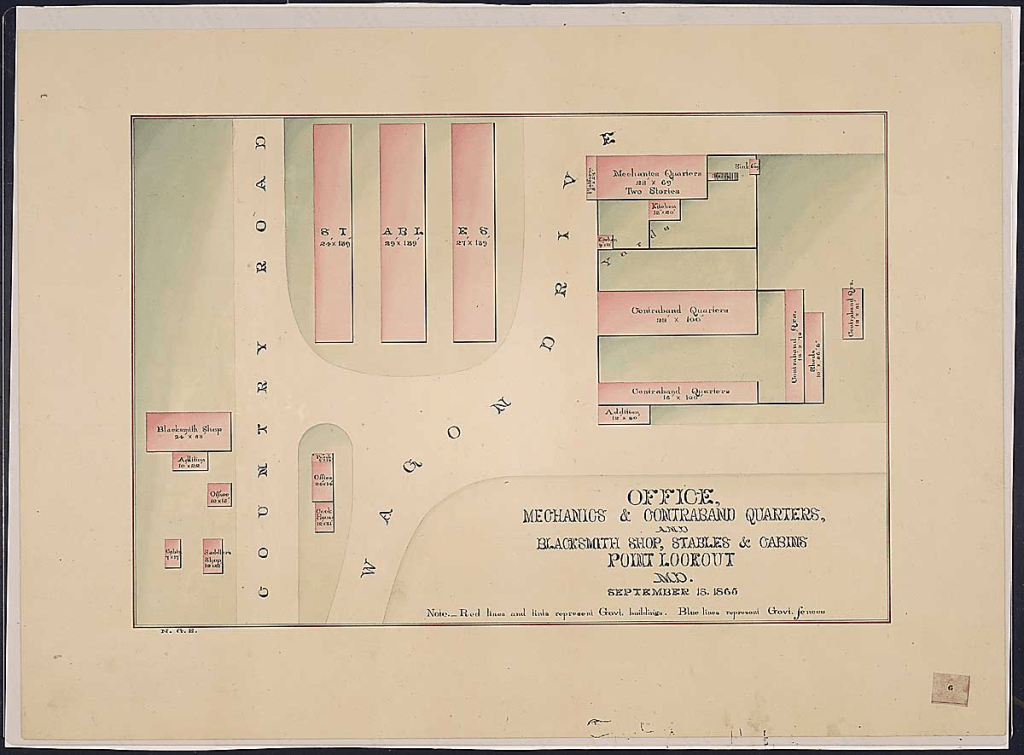
Maryland State Archives

Sources

Marks, Bayly E. “Skilled Blacks in Antebellum St. Mary’s County, Maryland.” The Journal of Southern History, vol. 53, no. 4, 1987, pp. 537–64, https://doi.org/10.2307/2208774. Accessed 5 Apr. 2022.

Gibbons, Abby Hopper. Life of Abby Hopper Gibbons: Told Chiefly Through Her Correspondence. United Kingdom, G.P. Putnam’s Sons, 1896. accessed from Google Books

Bucklin, Sophronia E.. In Hospital and Camp: A Woman’s Record of Thrilling Incidents Among the Wounded in the Late War. United States, J.E. Potter, 1869. accessed from Google Books

Jane Reeder

Question

What information can I find out about Jane’s life prior to her arrival in Washington DC?

Known Information

  • Jane Reeder is listed in the 1873 City Directory for DC at 17 14th NE. This is a couple of blocks east of Lincoln Park.
  • Jane is listed as the widow of Thomas.
  • Jane is also listed in the Freedmen’s Bank Records for James Reeder and Mary Fountain.
DetailJames Reeder’s
Bank Records
Mary Fountain’s
Bank Records
BirthplaceSt. Mary’s Countynot listed
Jane Reedermothermother
John Reederbrother
Thomas Reederbrother
James Reederborther
Walter Reederbrother
Mary Ellen Fountainsister

Source 1: St. Mary’s Slave Statistics

“The Slave Statistics consist of lists of slaves owned as of 1 November 1864, the date when the Constitution of 1864, which abolished slavery in Maryland, took effect. In the hope that the federal government would compensate former slaveholders, the General Assembly in 1867 authorized the compilation of records to establish slave ownership and the value of slave property. The governor appointed a commissioner of slave statistics for each county with a term in office of two years. Former slaveowners furnished the commissioner with descriptive information on each slave for whom they claimed ownership. The commissioner then recorded the lists and filed the records with the clerk of the circuit court of his county. (Ch. 189, Acts of 1867; Ch. 385, Acts of 1868). Entries give date of registration, name of the owner, and, if applicable, name of person acting for the owner. For each enslaved person, the records show his or her name, sex, age, physical condition, term of servitude, date of emancipation, and, if applicable, information on and compensation for military service.”

Source: Maryland State Archives

Agnes Kane Callum indexed the slave statistics for St Mary’s County and her index can be found on the Maryland State Archives website.

Her index includes the Reeder family on page 170.

Jane102
John121, 124
Thomas121, 124, 136
James121, 124
Mary Ellen121, 124
Walternot listed
Jane Reeder

Jane Reeder is listed as the sole enslaved individual by Ann Chiveral. Ms. Callum indicates that she is unsure of the spelling for Chiveral with a question mark. The entry also indicates that Jane escaped Ms. Chiveral enslavement in February 1863.

Excerpt from Slave Statistics, page 233
Jane’s Children

John, James, Mary Ellen, and Thomas are listed in the index for Edward Abell as owner, and for Edward Abell as guardians of George L Smith and Sarah C Smith.

Excerpt from Slave Statistics, page 283

Source 2: Ann E. Chiveral Documentation

The intent here is to track Ann E Chiveral through the available documentation: marriage records, census records, slave schedules and probate records in order to identify how Ann enslaved Jane and what labor Jane may have performed.

Marriage to William Chiveral

Ann E Tarlton married William Chiveral on 17 Sept 1861 (ancestry.com) and they share a household in the 1870 census (Roll: M593_594; Page: 546B). William is listed as an oysterman and she has three children, including Virginia and Mary Tarlton. The household is listed in District 2, near the Great Mills post office with no personal estate or real estate.

In the 1860 Census (Roll: M653_479; Page: 14), Ann E Tarlton is listed with three children, including A. Virginia and Mary Tarlton. No adult male is listed in her 1860 household. She is living in District 1, St. Mary’s, near the St. Inigoes Post Office. She has personal estate worth $500. In comparison, her neighbors have personal estates worth thousands. In 1860, the personal estate included value of property, possession, or wealth and included estimated values of enslaved individuals.

Ann Tarlton is not listed in the 1860 Slave Schedule which would list her name and the gender and age of the individuals she enslaved. This suggests that either Ann E. Tarleton/Chiveral enslaved Jane after 1860, or failed to report her in the 1860 slave schedule. However, as William is not listed as the owner in the Slave Statistics, despite being alive, it suggests that Ann E Chiveral was the enslaver, not William, and that she brought Jane with her to her new household when Ann and William married in 1861.

William Chiveral is listed in the 1860 and 1850 Census with his mother, Ann Maria Chiveral in District 2, near Great Mills. His mother was a seamstress and William was a sailor. When Ann married William, she moved away from her residence to join William near his family.

Virginia Tarlton is indicated as an invalid in the 1870 Census and has the comment “idiotic” written on her record in the 1860 Census. This raises the possibility that Ann needed help taking care of Virginia and that Ann enslaved Jane to assume the role of caretaker.

Marriage to Basil Tarlton

Prior to her marriage to Chiveral, Ann E Wheatley married Basil Tarlton in 1853, who died by 1857, when his inventory and account of sales were listed in the probate records of St. Mary’s County (familysearch.org). Among his probate records is the distribution of the estate to his family: Ann as his widow got 1/3 of the estate, around $980, and his 9 children received an equal sum, around $220. Ann V(irginia) Tarlton and Mary E Tarlton are among the children listed.

His estate records named four enslaved individuals who were sold: two men, Lewis and John, and an unnamed woman and child. Records indicate that William M. Moore paid to enslave the unnamed woman as part of the estate sales. (St. Mary’s County, Account of sales 1851-1857 vol GC3, p 517 | familysearch.org). William W. Moore is the son of John T Moore, Ann’s neighbor in the 1860 Census.

Sister-in-law to John T. Moore

Ann Tarleton’s dwelling number is 86 in the 1860 census. Dwelling number 85 contains individuals with the last name of Moore and Tarlton. John Moore heads the household with a personal estate worth $4000. He employs and/or houses several young adult/children with the surname Tarlton. Their given names are similar to the list of children on Basil’s estate distribution record: William, James P, and George. Both John T Moore and William W Moore had an account of sales for their estate recorded in spring of 1865 (Account of sales 1857-1865 vol GC4), suggesting they died near the end of the Civil War.

In the 1850 census, Ann E Wheatley is living in the household of John T. Moore. He is 43 and his wife, Mary, is 28. Ann is 25. Marriage records show that John Moore married Mary Wheatley in 1843 in St. Mary’s County (ancestry.com).

Initial Conclusions

Ann was living with her sister in her brother-in-law’s household until her marriage to Basil Tarlton, a widower with several children. Ann Virginia Tarlton was born the same year he married Ann and had some sort of condition that resulted in the census taker indicating her status as invalid. The year of her birth, 1853, was the same year he married Ann. It is a possibility that his previous wife had had a difficulty delivery and died while giving birth to Ann Virginia, and that she became an invalid due to the complications during birth. Ann Wheatley/Tarlton continued to care for her step-daughter while the older step-children lived with her sister. This proposed one possibility for the labor that Ann expected from Jane, especially as Ann had no real estate and limited personal estate.

Ann enslaved Jane prior to 1862, possibly when William W Moore purchased the unnamed woman from the Tarlton estate in 1857. Ann remarried again, this time to a modest sailor who did not have property. Shortly after Ann’s marriage and move out of District 2, Jane escaped, making her way to DC.

This conclusion does not account for Jane’s children and how they came to be enslaved on the Abell estate. Additionally, this theory does not demonstrate with any documentary evidence that the enslaved woman was transferred from William W Moore to the Tarlton/Chiveral household.

Susan and Isaac Johnson | Freedom

Known Information

Susan and Isaac Johnson are the parents of Cassandra Johnson who married Bruce Dent in 1830.

Sources

Provine, D. S. (1996). District of Columbia free Negro registers, 1821-1861. Bowie, Md: Heritage Books.

Rogers, H. H., & District of Columbia. (2007). Freedom & slavery documents in the District of Columbia. Baltimore, MD: Gateway Press..

Land Record, Elizabeth Stump to Margeret Robertson, HD R 547 | mdlandrecs.net

A Biographical Dictionary of the Maryland Legislature 1635-1789 by Edward C. Papenfuse, et. al., pg 483 | Maryland Sate Archives

 Maryland Genealogical and Memorial Encyclopedia, pg. 644-645 | ancestry.com

Maryland Historical Trust | Stafford Farm | John Stump House

Race & Slavery Petition Project, Petition 20981106 | Digital Library on American Slavery

National Register of Historic Places Registration Form, Swansbury

The Baltimore directory and register, for the year 1816 | archive.org

Susan and Isaac Johnson registered their children, Jacob and Charles Johnson, as free in the District of Columbia on 15 September 1827. In Provine’s Book, she indicates that the Susan (Suckey) Johnson was manumitted in 1804 by Elizabeth Stamp [sic] of Harford County, MD, and that she is the wife of Isaac Johnson who was manumitted in 1818, two years after Archibald Johnson purchased him from Samuel Jay. The record also lists her children: Archibald (1810), Isaac (1812), Cassandra (1817), Mary Ann (1819).

Susan Johnson

Susan Johnson was enslaved by the Stump family, a large commercial family in Harford County, Maryland. The patriarch of the family had come from Prussia in the early 1700s and purchased land in Cecil County, Maryland (across the Susquehanna River) and his sons came to Harford County, MD.

Elizabeth Stump of Harford County, Maryland

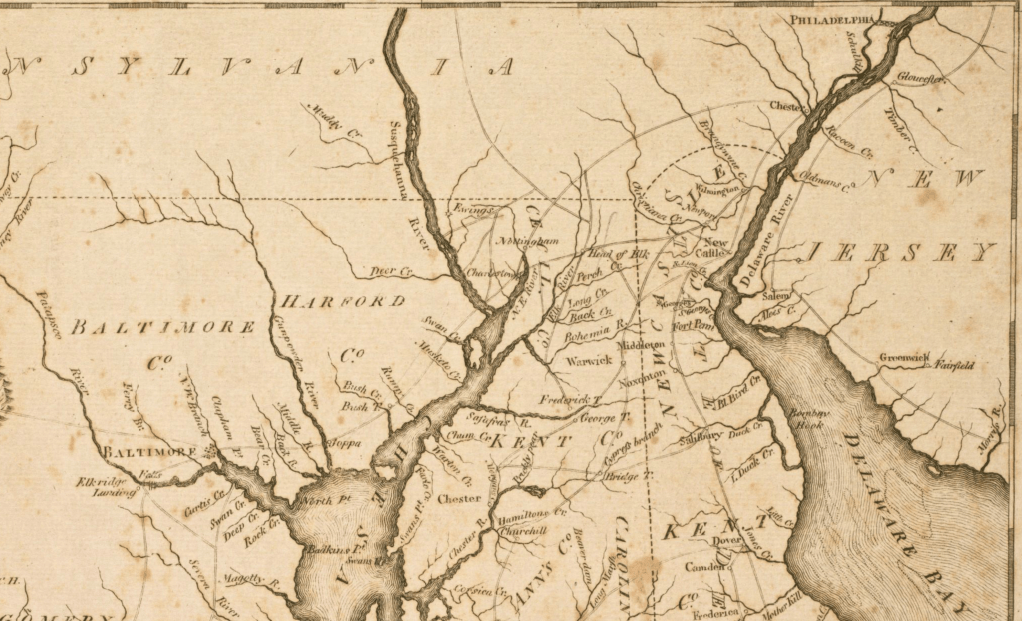
Harford County is located 25 miles northeast of Baltimore along the Susquehanna River and the Chesapeake Bay. It is between Philadelphia and Baltimore, both port cities during the Colonial and Federal period. Originally, the European Colonists created tobacco plantations, similar to southern plantations, however, the crops shifted so that by the end of the 18th century, the farms had shifted to growing wheat and corn, which was shipped to Europe and the West Indies from Baltimore and Philadelphia.

Excerpt from The states of Maryland and Delaware, from the latest surveys [1796] | Norman B. Leventhal Map Center Collection

In the 1790s, Elizabeth, the daughter of Josiah William Dallam, a wealthy landowner who enslaved people, married Herman Stump, one of the grandsons of the original patriarch. Her husband, Herman, was engaged in trade with his brothers, including John Stump, and they shipped flour produced at Stump Mills in Harford and across the mid-Atlantic to England and the West Indies. The map shows the location of one of these mills on Deer Creek along the Susquehanna, upstream from Havre de Grace.

Excerpt from Havre De Grace 1799 Susquehanna River and Chesapeake Bay, Maryland 1799 | historicmapworks.com

Herman Stump died in 1801, leaving Elizabeth Stump a wealthy widow. By 1804, she married again, to Abraham Jarrett. Prior to her marriage, she put her land and wealth into a trust held by her friend Margaret Robertson/Robinson. At the same time, she legally freed the people she enslaved, including Susan (Suckey) Johnson. In the petition, she that did so “believing freedom to be the inalienable right of all human beings”. While she stated this, her husband continued to enslave people. Despite her stated lofty ideals, it is possible to have a more cynical view of her actions. Prior to her second marriage, she placed her own wealth into a trust, suggesting that she was financially savvy, as her soon-to-be husband had debts that she wanted to protect her fortunes from. It could be, with the shift in economy, it was not longer economically viable for her to enslave people, as she would be taxed and she no longer had the lands on which to compel their labor.

William Taylor, of Havre de Grace

Havre de Grace was situated on the mouth of the Susquehanna. Built in the late 1780s, it came very close to be chosen as the national capitol. Built to be a booming trade town, it never grew to compete with either Baltimore nor Philadelphia. William Taylor lived in Havre de Grace, where he engaged in manufacturing. A 1818 court case names William Taylor as a blacksmith.

In 1820, he vouched for Susan’s freedom, saying that he knew her “from his first knowledge of things”. The 1810 Census lists Wm Taylor living on page 826 where many of the names on this and the following pages indicates that he lived in a neighborhood with a large population of Black families with free status. Susan (Suckey) is not listed among the heads of households. However, his testimony suggests that she lived in Havre de Grace for a period of time before moving to DC.

Isaac Johnson

In the meantime, while Susan was released from captivity in 1804, Isaac Johnson was enslaved until 1818. In 1818, Archibald Johnson, in consideration of one dollar, manumitted Isaac Johnson, whose he purchased from Samuel Jay about two years ago (1816).

Samuel Jay

Samuel Jay, like the Stumps, was engaged in commerce in Harford County. He owned 1000 acres near Swan Creek and in addition to a nail factory and other property. He married into the prominent Griffith family of Harford and served on the Board of Commissioners in the early 1800s with a Roger Boyce.

Jay and Boyce were also business partners; in 1799, Boyce and Jay entered into a partnership that revolved around a nail and anchor manufacturing factory in Havre de Grace. This partnership resulted in Boyce taking on a $3000 debt, and Jay controlled the promissory note. When Boyce died intestate without having repaid the debt, Jay asked the courts to compel Boyce’s widow to sell property to cover the debt.

The Chancery Court documents for this case name the people Boyce enslaved and whose captivity was transferred to Jay. The list not only includes an Isaac who is roughly the right age to be the Isaac Johnson married to Susan, but also the some of the names of the other individual slaves are names used by Isaac and Susan to name their children: Abraham, Charles, Jacob. This suggests a familial relationship between the people enslaved by Boyce and Isaac Johnson.

The Chancery Case was settled around 1815-1816 which is consistent with the timeline that Archibald Johnson purchased Isaac from Samuel Jay two years prior to 1818, when he manumitted him.

The Bill of Sale is documented in the Freedom and Slavery Records of DC:

Isaac Johnson (half brother to Archibald Johnson) Bill of Sale was recorded 16 January 1816, Samuel Jay sells to Archibald Johnson a free Mulatto of Baltimore, Harford County, Maryland, for $200 a slave and half brother of Archibald Johnson, named Isaac Johnson age about 45 years, Signed on 30 Dec 1815 by Samuel Jay

NameAge
Abram/Abraham*14
Charles*16
Denbugh45
Dick35
Frank15
Harry15
Isaac*15
Isaac*35
Jack*22
Jacob/Big Jacob*35
Jacob*17
Thomas
Will45
William

Archibald Johnson

In the late 1700s, two Archibald Johnsons lived in Harford County. Yet, by 1810, while an Archibald isn’t enumerated in the Harford County census, there is a Archd Johnson living in Baltimore Ward 1. The Baltimore directory and register, for the year 1816 lists Archibald C. Johnson living as a tailor at the corner of St. Paul’s Lane and Chatham street.

In the 1820 census, two years after Archibald purchased Isaac’s freedom, both an Archibald Johnson and an Isaac Johnson are enumerated in Washington DC, in Ward 4. Archibald Johnson is over 45 years old and lived with a free Black male 14-25, a free Black female age 14-25, 1 female under 14 and 2 enslaved females; living nearby, is Isaac Johnson.

Doradie Stewart and Rebecca Caroline Deville

This blog post is one of a series that explores the lives of the people enslaved by the Sasscer family, who lived south of Upper Marlboro in Prince George’s County, MD. The primary estate for the family was named Pleasant Hills and additional posts about the people can be found under the category “Pleasant Hills”.

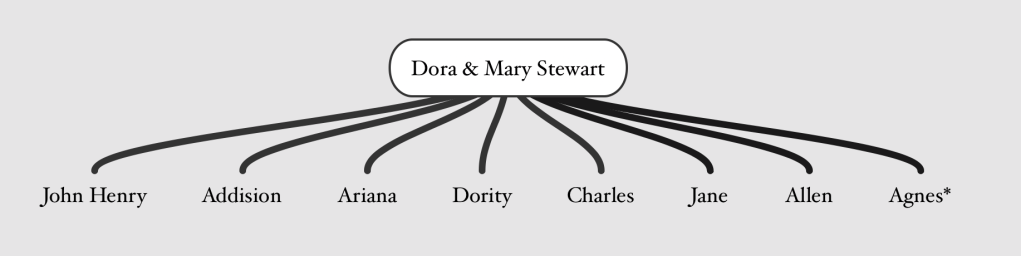
Identified children of Dora and Mary Stewart from the 1867 Slave Statistics, 1870 & 1880 Census, and Index of Marriage Licenses, Prince George’s County, Maryland 1777-1886

The third son of Dora Stewart has an unusual name. In some documents its recorded as Dorothy, others Dortha, some Doradie, and others yet Dougherty. None of the documents are consistent with their spelling, leaving the imagination to consider the possibilities.

In the 1867 Slave Statistics, Sasscer submitted the name Dorothy and listed the gender as female. The 1870 census listed the name as Dorothy, and again, the gender as female. In the 1870 marriage license, it records Dorothy Stewart marrying Caroline Deville. The 1880 census lists him as a male named Dority.

“District of Columbia, Freedmen’s Bureau Field Office Records, 1863-1872,” database with images, FamilySearch (https://familysearch.org/ark:/61903/3:1:3QS7-8937-FTL4?cc=2333782&wc=9J3J-829%3A1069293202%2C1069293101 : 3 August 2016), Local superintendent for Washington and Georgetown (correspondence) > Roll 16, Letters received entered in vol 1-3, Apr 17, 1867-Aug 20, 1868 > image 1341 of 1408; citing NARA microfilm publication M1902 (Washington, D.C.: National Archives and Records Administration, n.d.).

In 1868, his name is recorded as Doradie in a correspondence between the Marlboro Field Office and the District of Columbia Headquarters of the Freedmen’s Bureau. In this letter, “sundry names of Freedmen” were submitted as informants about a man posing as a agent and demanding money from them. The men, Doradie Stewart, John Galloway, John Henry Stewart, and Washington Galloway, are brothers and brothers-in-law. The letter lists their residence as on Zed. Sasscer’s farm two miles northwest of Marlboro. It can be inferred from the letter that one of them or an acquaintance of theirs sold their hogs to meet the demand of the spurious agent. “My informers threatened him with me, that they would inform me immediately” suggests that the family were aware of the Bureau and its work in the community.

In 1880, Doradie and his family are still living near his brothers and brothers-in-law, next door to Washington Galloway, and working as a tenant farmer on the Sasscer land.

additional families from Pleasant Hills

Doradie Stewart and Rebecca Caroline Deville

This blog post is one of a series that explores the lives of the people enslaved by the Sasscer family, who lived south of Upper Marlboro in Prince George’s County, MD. The primary estate for the family was named Pleasant Hills and additional posts about the people can be found under the category “Pleasant Hills”.…

Ariana Stewart and Pinkney Brown

This blog post is one of a series that explores the lives of the people enslaved by the Sasscer family, who lived south of Upper Marlboro in Prince George’s County, MD. The primary estate for the family was named Pleasant Hills and additional posts about the people can be found under the category “Pleasant Hills”.

Addison Stewart and Caroline Stewart

This blog post is one of a series that explores the lives of the people enslaved by the Sasscer family, who lived south of Upper Marlboro in Prince George’s County, MD. The primary estate for the family was named Pleasant Hills and additional posts about the people can be found under the category “Pleasant Hills”.

Something went wrong. Please refresh the page and/or try again.

Ariana Stewart and Pinkney Brown

This blog post is one of a series that explores the lives of the people enslaved by the Sasscer family, who lived south of Upper Marlboro in Prince George’s County, MD. The primary estate for the family was named Pleasant Hills and additional posts about the people can be found under the category “Pleasant Hills”.

Identified children of Dora and Mary Stewart from the 1867 Slave Statistics, 1870 & 1880 Census, and Index of Marriage Licenses, Prince George’s County, Maryland 1777-1886

Addison Stewart is the second oldest son of Dora and Mary Stewart. Addison was enslaved by the Sasscers, while his wife and son were living elsewhere. Their marriage was recognized in 1870; the marriage license lists his wife as Caroline Stewart, leaving ambiguity as to what her maiden name was. The PG Slave statistics do not list a Caroline Stewart nor a Nathan Stewart

Birth years calculated from the 1870 Census

In 1870, Addison and his family are living with the other Stewarts, working the Sasscer land. Addison is a farm hand while Caroline, his wife, is listed as “keeping house”. Unlike the other wives of the Stewart family, who are listed as servants. This suggests the possibility that Caroline provided child care while the others worked in the fields and the house. In 1880, Addison is still working the land, though it appears he moved away from the Sasscer lands to an estate closer to the Patuxent River. He is listed in the census as living near Richard B. B. Chew who held lands along the river. Addison is neighbored with another person identified as being enslaved by the Sasscers, Tom Beall.

By 1880, Addison has become injured, though the extents of his injuries are unclear. The census taker marked that he was “maimed, crippled or bedridden” while also marking his occupation as “farm hand”. This suggests that despite the injury, Addison still worked the fields; his wife Caroline, is still listed as “keeping house”. In the 1890s, Addison is listed as an “out-pensioner” in the Prince George’s Enquirer and Marlboro Advertiser; an “out-pensioner” received direct payment support from the County, as opposed to being housed in the county poor-house. They were typically granted to individuals deemed “too old, crippled or young to work”. More information about this can be found on the Maryland State Archives page. This suggests that Addison’s injury prevented him from working over time. He died in 1904 from a cerebral hemorrhage, his occupation still listed as a “Farm Hand”.

additional families from Pleasant Hills

Dora Stewart and John Henry Stewart

This blog post is one of a series that explores the lives of the people enslaved by the Sasscer family, who lived south of Upper Marlboro in Prince George’s County, MD. The primary estate for the family was named Pleasant Hills and additional posts about the people can be found under the category “Pleasant Hills”.…

Addison Stewart and Caroline Stewart

This blog post is one of a series that explores the lives of the people enslaved by the Sasscer family, who lived south of Upper Marlboro in Prince George’s County, MD. The primary estate for the family was named Pleasant Hills and additional posts about the people can be found under the category “Pleasant Hills”.

Identified children of Dora and Mary Stewart from the 1867 Slave Statistics, 1870 & 1880 Census, and Index of Marriage Licenses, Prince George’s County, Maryland 1777-1886

Addison Stewart is the second oldest son of Dora and Mary Stewart. Addison was enslaved by the Sasscers, while his wife and son were living elsewhere. Their marriage was recognized in 1870; the marriage license lists his wife as Caroline Stewart, leaving ambiguity as to what her maiden name was. The PG Slave statistics do not list a Caroline Stewart nor a Nathan Stewart

Birth years calculated from the 1870 Census

In 1870, Addison and his family are living with the other Stewarts, working the Sasscer land. Addison is a farm hand while Caroline, his wife, is listed as “keeping house”. Unlike the other wives of the Stewart family, who are listed as servants. This suggests the possibility that Caroline provided child care while the others worked in the fields and the house. In 1880, Addison is still working the land, though it appears he moved away from the Sasscer lands to an estate closer to the Patuxent River. He is listed in the census as living near Richard B. B. Chew who held lands along the river. Addison is neighbored with another person identified as being enslaved by the Sasscers, Tom Beall.

By 1880, Addison has become injured, though the extents of his injuries are unclear. The census taker marked that he was “maimed, crippled or bedridden” while also marking his occupation as “farm hand”. This suggests that despite the injury, Addison still worked the fields; his wife Caroline, is still listed as “keeping house”. In the 1890s, Addison is listed as an “out-pensioner” in the Prince George’s Enquirer and Marlboro Advertiser; an “out-pensioner” received direct payment support from the County, as opposed to being housed in the county poor-house. They were typically granted to individuals deemed “too old, crippled or young to work”. More information about this can be found on the Maryland State Archives page. This suggests that Addison’s injury prevented him from working over time. He died in 1904 from a cerebral hemorrhage, his occupation still listed as a “Farm Hand”.

Dora Stewart and John Henry Stewart

This blog post is one of a series that explores the lives of the people enslaved by the Sasscer family, who lived south of Upper Marlboro in Prince George’s County, MD. The primary estate for the family was named Pleasant Hills and additional posts about the people can be found under the category “Pleasant Hills”.

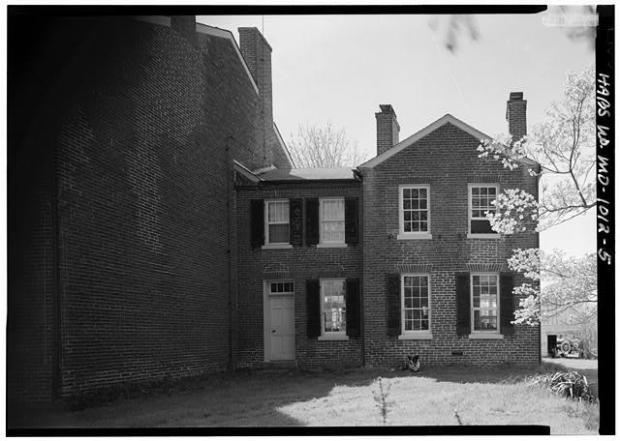
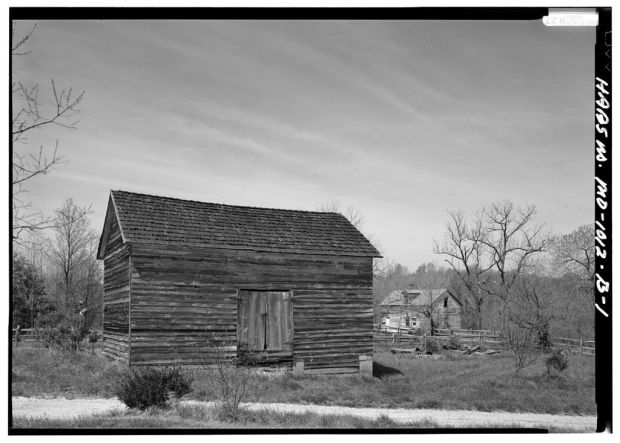
Historic American Buildings Survey, Creator, and Catherine C Lavoie, Boucher, Jack E, photographer. Pleasant Hills,Croom Station Road, Upper Marlboro, Prince George’s County, MD. Prince George’s County Maryland Upper Marlboro, 1933. Documentation Compiled After. Photograph. https://www.loc.gov/item/md1231/.

Dora Stewart was 70 years old when he was emancipated in 1864 by the Maryland Constitution. He had been enslaved by the Sasscer family since at least 1821 when he was listed in the inventory for William Sasscer’s estate, where he was valued at $500. His inferred wife, Mary and his children were also enslaved by the Sasscer family. In the 1870 census, Dora and many of his family and those enslaved by the Sasscer’s were still living on the lands of Pleasant Hills. Dora’s occupation was recorded as a servant, suggesting that he continued to work for the Sasscer family, cleaning and repairing their dwelling plantation. His wife, Mary, is not listed in the census records, which suggests she died before 1870 and Dora is not listed in the 1880 census which suggests he died between 1870 and 1880.

Identified children of Dora and Mary Stewart from the 1867 Slave Statistics, 1870 & 1880 Census, and Index of Marriage Licenses, Prince George’s County, Maryland 1777-1886

John Henry Stewart & Harriet Ann Thomas

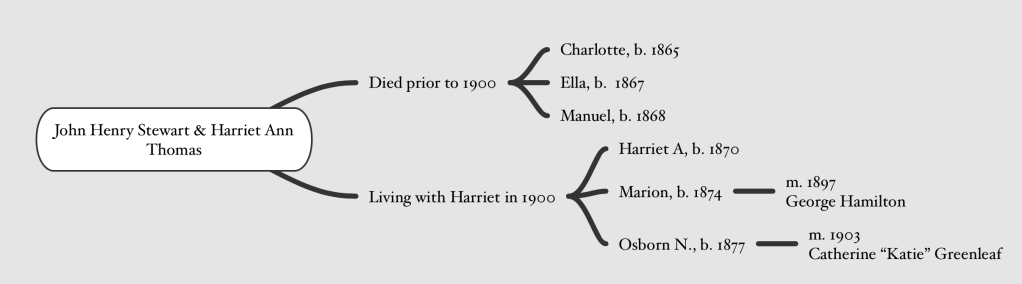
John Henry is the oldest identified son of Dora Stewart. He and his wife, Harriet Ann Thomas, lived with Dora and their two daughters on the Sasscer land after emancipation.

Based on the Slave Statistics, Harriet was most likely enslaved by the estate of Mary M. Warring. Her estate was managed by John H. Waring after her death in the 1850s.

John Henry continued to work the land, while both Ann and Dora worked as servants. In both census, he listed near the residence of Henrietta (Sasscer) Hill, Zadock’ daughter and her husband, William I Hill. By 1900, his wife, Harriet is listed as a widow in the census. Harriet Ann Stewart, Dora’s daughter-in-law, died in 1907 and her death certificate was completed by her son-in-law who listed her father as Stephen Thomas. They had seven children, six of which have been identified in the census records and four of which died prior to the 1900 census.

Family recreated based on information provided in 1900-1910 Census
The 1900 & 1910 census recorded “Number of Years married” and the 1900 Census recorded “Mother of how many children” and “Number of children still living”

Reeders | St. Mary’s County

Known Information

Multiple documents connect the Reeders to St. Mary’s County.

Sources

ST. MARY’S COUNTY
COMMISSIONER OF SLAVE STATISTICS
(Slave Statistics)
1867-1869
C1698 | Maryland State Archives

The following documents suggest St. Mary’s County as a place of research for the Reeder family:

  • James Henry Reeder listed St Mary’s County on his service records and the Freedman’s Bank records
  • John Reeder listed St Mary’s County on his USCT service records and his marriage records in the Freedmen’s Bureau Records
  • James Henry Reeder and Emeline Dorsey Reeder listed St. Mary’s County on a birth return for two children
  • John and Cora Key Reeder listed St. Mary’s County on a birth return for two children

Slave Statistics

Emeline Dorsey, wife of James Henry Reeder

John Milburn reported enslaved nineteen people, including a Dorsey family group.

Enslaved IndividualsAge
Mary Dorsey45
Emeline Dorsey25
Catherine Dorsey23
William Dorsey19
Josiah Dorsey16
Susan Dorsey 11
Philmore Dorsey8
Mary Dorsey4

In 1867, the Maryland General Assembly ordered that enslavers provide lists the individuals they enslaved in 1864. These lists were to be submitted to the federal government in hopes of federal compensation the enlistment of enslaved individuals into the Union Army. No compensation was provided. The records however, include the enslaver’s name, the first and last name of the enslaved as well as their age and gender, allowing the researcher to go past the 1870 census to track family groups and households. Slave statistics survive for Anne Arundel, Dorchester, Frederick, Howard, Kent, Montgomery, Prince George’s and St. Mary’s counties.

Cora Kee/Key, wife of John Reeder

The Freedmen’s Bureau records indicate that Cora and John were married in 1861 by a priest with the last name Moore. This suggests that both Cora Kee and Cora Reeder should be used as search terms in the Slave Statistics. Cora Kee/Key is not listed. Cornore Reeder is.

John A Crane enslaved twenty two individuals, including Cornore Reeder, age 20 and Mary Alice, age 2. John and Cora Reeder listed one child on their marriage report; it is possible that Mary Alice is that child. In the 1880 Census, they list another daughter named Alice who was born in 1877 suggesting that Alice is a family name.

In the 1870 Census, Cora and John Reeder have three individuals with the surname Key living in their household: Mary, Caroline and James. George H. Morgan reported enslaving 24 people, including a family group of Keys.

Enslaved IndividualAge
Cecelia Key25 (Left, Nov 11, 1863)
Jack Key6 (Left, Nov 11, 1863)
Elizabeth Key8 (Left, Nov 11, 1863)
Sarah A Key23
James Key5
Mary Key10

Jane Reeder, mother of the Reeders

Mrs. Ann E Chiveral listed enslaving one individual: Jane Reeder, age 46.

She left with the Union Army on 20 Feb 1863.

the Reeders

Edward L Abell listed 28 enslaved individuals under his own name, and six as guardian for the Smith children. The six individuals appear on both lists, and include James (19), John (30), Thomas (21), and Mary Ellen Reeder (16).

He noted that they left with the Union Army:

  • Thomas Reeder left first: 14 Sept 1862
  • James Reeder left: 17 Oct 1863
  • John and Mary Ellen left: 28 Oct 1863

Thomas Reeder

James L Foxwell reported enslaving thirty individuals, among them Thomas Reeder, age 45. This Thomas is too old to be Thomas Reeder in DC, and is of a similar age as Jane Reeder, suggesting he may be a brother or spouse of Jane.

Further Research Needed:

  • Identify the land of the enslavers: Milburn, Foxwell, Chiveral, Smith and Abell
  • Locate inventories related to the enslavers and their family which may contain names of family members and/or the family groups.

related posts

Thomas Reeder vs. James Thomas Reeder

Known Information

Two Thomas Reeders lived in DC after the Civil War.

Sources

Freedmen’s Records

District of Columbia, Freedmen’s Bureau Field Office Records, 1863-1872,” database with images, FamilySearch (https://familysearch.org/ark:/61903/3:1:3QS7-8937-FP18?cc=2333782&wc=9J3J-SPX%3A1069293302%2C1069293906 : 3 August 2016), Assistant inspector general > Roll 1, Letters sent, Mar 21, 1866-Sep 7, 1868 > image 41 of 146; citing NARA microfilm publication M1902 (Washington, D.C.: National Archives and Records Administration, n.d.).

City Directory

Washington, District of Columbia, City Directory, Various

There were two Thomas Reeders who lived in DC after the Civil War. James Thomas Reeder, who alternatively went by James and Thomas, married Clara Woodland and they had one son, John V. Thomas Reeder, married to Martha, lived in Jackson Alley for the bulk of his life in DC.

  • Freedmen’s Records

    Clara Reeder claimed that she and Thomas Reeder had selected two lots in Barry Farm and was inquiring in the case.

    James Reeder, from Anne Arundel County, and Clarissa with their son John V, are living in Freedmen’s Village.

    Thomas Reeder, with John and Benjamin Fountain, received goods from the Superintendent at the Kendall Green Barracks.

  • 1870 Census

    James T. Reeder is listed in the household of Mary Woodland and her daughters, including Clara Woodland. He is listed as Thomas Reeder. John V. Reeder is listed as his son. They are living in Ward 3. Other surnames in the household include Chesley.

    Thomas Reeder is living with his wife, Martha and his infant daughter Mary E. Reeder. They are living in Ward 3.

  • 1871 City Directory

    James T. Reeder is living at 1214 3d NW.

    Thomas Reeder is living at 1417 1st NW.

    This address is consistent with the tax records in the newspapers addressed in a different post.

  • 1873 City Directory

    Thomas Reeder is living at 813 L NE. He is a porter

    Thomas Reeder is living at 811 L NW. So is James Reeder.

  • 1877 City Directory

    James T Reeder is living at 1622 2d Street.

    Thomas Reeder is living at 1419 1st NW.

  • 1879 City Directory

    James T Reeder is living at 43 Pierce.

    Thomas Reeder is living at Pierce Street Alley NW

  • 1880 Census

    James T. Reeder is listed as head of a household that includes Mary Woodland. His wife is named a Clarissa Reeder and his son, John V is listed. He is also living with his niece, Mary Reeder, age 24. They are living on N Street NW. Other surnames include Chisley

    Thomas Reeder is living with his wife, Martha and his three children, Mary, Joseph and Georgiana. They are living on Jackson Alley.

  • 1883-4 City Directory

    James T & Thomas Reeder is living at 418 N NW. He is working as a laborer. His son is also listed as living here.

    Thomas Reeder is living at 71 Jackson Alley. He is working as a laborer

  • 1885 City Directory

    James T Reeder is living at 418 N NW. He is working as a laborer.

    Thomas Reeder is living at Jackson Alley. The address is unnumbered. He is working as a laborer

  • 1893 City Directory

    J Thomas Reeder is living at 444 Ridge NW. He is working as a laborer. His son is also listed as living here.

    Thomas Reeder is living at Jackson Alley. The address is unnumbered. He is working as a laborer

  • 1894 City Directory

    J Thomas Reeder is living at 444 Ridge NW. He is working as a laborer. His son is also listed as living here.

    Thomas Reeder is living at 34 Jackson Alley. He is working as a laborer

  • 1895 City Directory

    J Thomas Reeder is living at 462 Ridge NW. He is working as a laborer. His son is also listed as living here.

    Thomas Reeder is living at 36 Jackson Alley. He is working as a laborer

  • 1898 City Directory

    James T. Reeder is living at 462 Ridge NW. He is working as a laborer. His son is also listed as living here.

    Thomas Reeder is living at 50 Jackson Alley. He is working as a laborer

  • 1900 Census

    Thomas Reeder is listed as head of a household with his wife Clara, their son John and his wife. John is a musician. They are living on Ridge NW

    Thomas Reeder is living with his wife, Martha and his two children, Joseph and Charles. They are living on Jackson Alley.

  • 1901 City Directory

    James T. Reeder is living at 462 Ridge NW. He is working as a laborer. His son is also listed as living here.

    Thomas Reeder is living at 50 Jackson Alley. He is working as a laborer

  • 1910 Census

    James T and Clara W are living in the household of of John V on Ridge St NW. It indicates that John V is their only child.

    Thomas Reeder is the Home for the Aged and Infirm. He is living as a widower.

  • 1920 Census

    James T and Clara W are living in the household of of John V on Ridge St NW.

    Thomas Reeder is the Home for the Aged and Infirm. He is living as a widower.

  • Death

    The Evening Star ran the obituary of James Thomas Reeder. It names his son, John V, and his daughter in law as well as their home address on Ridge NW. His death record lists his parents: Barnes Reeder and Henrietta Reeder. He was born in St. Mary’s County, MD.

    A Thomas Reeder, without identifying information died in 1929. This is consistent with a death in an institution where there is little information about his background.

    Another Thomas Reeder is listed with a death in 1924, however, an obituary lists family members not consistent with either Reeder and his age places his birth year in the 1880s. His death records lists his address as 2nd Street SE which is not consistent with City Directories or Census Records.

related posts

Reeder Siblings | marriages

Known Information

James, John, and Thomas Reeder and Mary Ellen (Reeder) Fountain lived in DC after the Civil War.

Sources

Census

1870; Census Place: Washington Ward 3, Washington, District of Columbia; Roll: M593_124; Page: 475A

1870; Census Place: Washington Ward 3, Washington, District of Columbia; Roll: M593_124; Page: 475B

1870; Census Place: Washington Ward 3, Washington, District of Columbia;Roll: M593_124; Page: 449B

Marriage Records

District of Columbia, Marriage Records, 1810-1953 | ancestry.com


United States, Freedmen’s Bureau Marriages, 1861-1872 | familysearch.org

City Directory

District of Columbia Birth Returns, 1874-1897 | familysearch.org

Birth Certificates

Reeder, Baby, 9236, 20 Nov 1876 | DC Archives

Reeder, Baby, 28331, 16 Jan 1882 | DC Archives

Reeder, Baby, 36254, 15 May 1882 | DC Archives

Three Reeder brothers, James, John, and Thomas were recorded in the 1868 Washington City Directory as living at M and 6 NE, which is near the Kendall Green Barracks. Bank records also list them as the brothers of Mary Ellen Fountain.

James Reeder

James was living with Emeline, his wife, and their sone Henry J. in 1870. Walter Reeder, age 11, is also living with them. Based on the bank records of Mary Ellen Fountain, Walter is James’ younger brother.

DC Marriage records lists a marriage for James Reeder and Emeline Dorsey on 13 Aug 1868. A birth record for a daughter born in 1876 lists both James Henry Reeder and Emeline Dorsey Reeder as the parents, and that they both were born in St. Mary’s County, MD. A birth record for a daughter born in 1883 lists Emeline’s last name was West, but provides the mother’s birthplace as St. Mary’s County

John Reeder

John Reeder is living with his wife, Cora, and their son, Willie, who was born in DC in 1868; Cora collected rations in January 1868 due to “sickness”, it is possible that in addition to any number of illnesses suffered by freedpeople as a result of malnourishment, exposure from poor shelter and clothing, that she was pregnant and sick with morning sickness.

They are living with is likely the younger siblings of Cora, suggesting that her last name is Key.

The Freedmen’s Bureau recorded marriages for freedmen that had not been formally recognized before. In 1867, John Reader and Cora Keys had their 1861 marriage in St. Mary’s County, MD, recorded in the DC Bureau They listed that they had one child, which suggests that they had an older child prior to Willie. A priest named Moore married them.

Thomas Reeder

Thomas is living with his wife, Martha, and their daughter Mary E. They do not have any other family living with them.

DC Marriage Records lists Thomas Reeder’s marriage to Martha Colbert in June 1867. An 1882 birth certificate for their son lists her maiden name as Calbert and that she was born in Prince George’s County.

Mary Ellen Reeder

Mary E Fountain is living near her brother, Thomas Reeder, just a few households away in the census. She is living with her husband Benj. F. Fountain.

DC Marriage Records lists Mary Ellen Reeder’s marriage to Benj Franklin Fountain in June 1866. No children have been located for them.

Further Research Needed:

  • Research the Key, Dorsey and Reeder family in St. Mary’s County
  • Research the Colbert family in Prince George’s County
  • Research the Fountain family in Virginia

related posts